THE PRE-MECHANICAL AGE
Period between 3000 b.c y 1450 a.c
- The man faced to basic needs, two of which were communicate and count objects.
- The Scripture and the numbering systems were invented
- Also the support of Technologies that today we use; for example:
.
THE NAPIER'S BONES: is a manually-operated calculating device created by John Napier of Merchiston for calculation of products and quotients of numbers. 
THE MECHANICAL ERA
Can be define as the time between 1450 and 1840 the inventors began to use techniques and tools to create machines to conduct certain tasks.
PRINTING
Invented by —Printing, invented by Johann Gutenberg was one of the most outstanding, machines made accessible the information written to the general public and helped create new forms of Government with educated and cultured citizens.

Invented by —Printing, invented by Johann Gutenberg was one of the most outstanding, machines made accessible the information written to the general public and helped create new forms of Government with educated and cultured citizens.


BLAISE PASCAL
—Around 1642, the French mathematician at
just 19 years built the first automatic calculator
to help his father, a tax collector who worked hard
in the calculation of large arithmetic operations.
THE PASCALINE
- —Also called Arithmetic Machine.
- —It could only do addition and subtraction, with numbers being entered by manipulating its dials.
- —He built 50 of them in 10 years.
THE ELECTROMECHANICAL ERA
The discovery of ways to harness electricity was the key advance made during this period.
-Knowledge and information could now be converted into electrical impulsese. The beginnings of telecommunication.
- Voltaic Baterry
- Telegraph
- Telephone and Radio

Voltaic Battery
Alessandro Volta invented
the voltaic pile which is considered
to be the first source of stored
electricity in th 8th Century.
The battery made by Volta is credited as
the first eletromechanical cell.
It consists of two electrodes;
one made of zinc, the other of cooper.

Telegraph
the first magnetic telegraph
in the year 1832.
Telephone and Radio
The first sucessful B1- Directional
Transmition of clear speech by Bell
and Watson was made on 10 march 1876.
The images could be seen on TV consisted
Marchese Guglielmo Marconi was an italian
The images could be seen on TV consisted
Marchese Guglielmo Marconi was an italian
radiotelegraph system which served as the
fundation for the best establishment of
numerous affiliated
companies worldwide.
THE ELECTRONIC ERA
 The TV
The January 26, 1926, John Logie Baird,
make the first television broadcast in his
laboratory in London, before members of
the British Royal Institution and a journalist.
of a recording the face of a mannequin.
companies worldwide.
THE ELECTRONIC ERA
In the electronic age, they were conducted discoveries of communication that had immediate practical application and vice versa, practical applications, communication helped to solve different problems, which in turn opened up new horizons.

The January 26, 1926, John Logie Baird,
make the first television broadcast in his
laboratory in London, before members of
the British Royal Institution and a journalist.
of a recording the face of a mannequin.
 The computer
The first computer was the Z2 during the
year 1940, later the Z3 used binary numbers
and floating point arithmetic. The Z3 also utilized
a punched film for program input. The Z3 computer used
2,600 telephone relays. could convert decimal to
binary and back again.
The mobile phone
 Mobile phones were invented as
early as the 1940s when engineers
working at AT&T developed cells
for mobile phone base stations.
The very first mobile phones
were not really mobile phones at all.
They were two-way radios that allowed
people like taxi drivers and the emergency
services to communicate
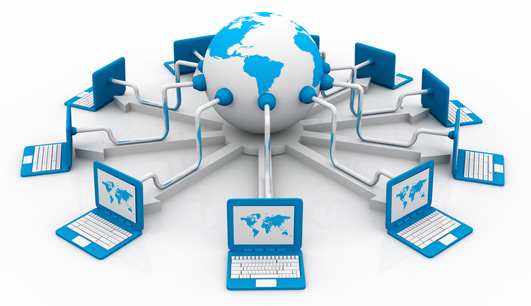 The Internet
 represents one of the most
successful examples of the benefits of sustained
investment and commitment to research and
development of information infrastructure.
Beginning with the early research in packet switching, the government, industry and academia have been partners
in evolving and deploying this exciting new technology.

No hay comentarios.:
Publicar un comentario